As we age, it is more important than ever not to abandon good nutrition.
• Slower metabolism means you need fewer calories to maintain a healthy weight. • You have different nutritional needs – extra calcium to combat osteoporosis, low cholesterol to help prevent heart attacks, less salt to slow hypertension, etc. • Your specific dietary needs may vary; check with your doctor for a personal nutrition plan.
Following is a list of the recommended servings* from the basic food groups for the average person.
Fruits (2 cups daily) One 1/2 –cup serving equals:
• ½ cup fresh, frozen, or canned fruit • 1 medium fruit • ¼ cup dried fruit • ½ cup fruit juice
Vegetables – 2-1/2 cups daily One ½-cup serving equals:
• ½ cup cut, raw, or cooked vegetables • 1-cup raw leafy vegetables
Grains – 6 ounces per day, at least half from the whole grains One 1-ounce serving equals:
• 1 slice bread • 1 cup dry cereal • ½ cup cooked rice, pasta, or cereal
Lean Meats, Beans – 5-1/2 ounces per day One 1-ounce serving equals:
• 1 ounce cooked lean meat, poultry, or fish • 1 egg • ¼ cup cooked dry beans or tofu • 1 tablespoon peanut butter • ½ ounce nuts or seeds
Dairy – 3 cups daily One 1-cup serving equals:
• 1 cup low fat/fat-free milk or yogurt • 1-1/2 ounces low fat or fat-free natural cheese • 2 ounces low-fat or fat-free processed cheese
Oil – Up to 6 tablespoons daily (Generally 1 tablespoon = 3 teaspoons) One 1-teaspoon serving equals:
The 20th century, more than any other, has been one of staggering transformation.
Our population has mushroomed by almost 200 million since 1900. Passenger travel zoomed from the horse to the supersonic. Computers accomplish in hours what took turn-of-the-century factory crew days. And the foods we've eaten and how we entertain have taken an equally remarkable journey.
This post is a journey through yesterday in entertaining. Although customs and conventions have changed in response to a changing world you may note that as Cole Porter said: “Everything Old is New Again.”
(Following Tips Are Circa 1922)
WHAT THE WELL-DRESSED TABLE WEARS For the formal dinner or luncheon, damask in white or pastel shades, or an Italian or Spanish filet cloth is suitable. This cloth should cover the table.
For less formal occasions, whether breakfast, luncheon or dinner, runners or doilies and a matching centerpiece are charming.
SMART SIMPLICITY IN SILVERWARE The newest silver is in harmony with the other house decorations; period patterns for Georgian interiors, Early American patterns for the cottage. Good taste rules out elaborately shaped pieces, except when these are heirlooms of real worth.
CHINA-COLORFUL AND CHERISHED For china also it is advisable to choose from an open stock pattern the number and kinds of pieces suited to your needs. You may prefer different patterns for various courses, or wish to supplement china with colored glassware. In any event, the colors should harmonize with the dining room decorations.
NEW THOUGHTS ON TABLE DECORATIONS Suit the decorations to the type of entertainment and the character of the house. While choosing your decorations, always remember that simplicity is the keynote of good taste.
WHAT TO KNOW ABOUT SETTING THE TABLE The general rules for table setting are the same for formal and informal occasions. The china and silver depend on the menu.
SMART SERVICE AT THE TABLE The maid usually wears a simple black frock with dainty collar, cuffs and a small apron of linen, lawn, or organdie. Many hostesses, however, prefer costumes, which harmonize with the color scheme of the dining room.
If the first course is cold, as hors d'oeuvres the maid should place it on the table before announcing the meal; canapés may be served in the living room. Much of the food may be apportioned and placed in serving dishes before the meal is announced, and kept hot in a large steamer with shelves, or in pans of hot water set in the oven.
When the guests are assembled the maid steps to the door of the living room, and catching the attention of the hostess, say, “Madame, dinner is served.” The host, with the lady guest of honor, precedes the other guests to the dining room the hostess and the most important gentleman come last.
Some hostesses prefer the Russian style of service in which all foods are served from the pantry; the roast is carved there, and no foods are placed on the table until guests are seated, with the exception of nuts and candy. A less formal style of service, however, is correct. Soup, for instance, may be served from the pantry, but if the hostess has a rare old tureen, she may prefer to serve it herself at the table, ladling it into flat soup plates and used at dinner.
At the end of the course, the maid removes the soup plates, places the roast in front of the host, the hot plates at his right, and takes her place at his left so she will be in position to pass the plates when he has served the meat. Traditionally, the hostess is served first, but a newer form is to accord this favor to the lady guest of honor. The service thereafter continues around the table. After the meat course the maid passes vegetables, taking care that the handles of the serving spoon and fork pint toward the guest. She has a folded napkin between her hand and the hot dish, and holds the dish at a height convenient for guests to help themselves.
Everything is passed and served from the left, except beverages and extra silver, which are placed at the right. Dishes are removed from either left or right.
When the main course is finished, the maid removes all serving dishes and utensils, then the plates, which must not be piled; and last, the unused china and silver. Beverage glasses are left in place and refilled, if necessary.
Before dessert is served, crumbs should be brushed from the table into a place by means of a clean soft napkin. The dessert silver is then placed, and the dessert and finger bowl service follow. Dessert may be served from the kitchen or at tableside by the hostess. Coffee may be poured at the table, but a pleasant custom is to serve it in the living room.
###
The following video, Animal Crackers, courtesy of You Tube.
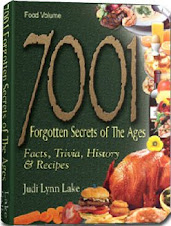
Re-discovered and Available Now For The First Time In This Massive Collection Of Over 625 Pages
This is a Two Pound Paper and Ink Book
This book is for the person who:
• Loves discovering new ways (really the old time proven ways) to accomplish magic in the kitchen • Is interested in ALL aspects of food • Are trivia buffs • Are seekers of knowledge • Is looking for ways to enjoy life and have more fun in the kitchen • Enjoys entertaining in new and different ways • Is interested in ways of doing things that are environmentally safe • Is looking for the "Perfect Gift" for anyone on any occasion • Is interested in the health and safety of their family • Wants to save time and money • Likes to be the first to share new and unusual information • Teaches children and wants to have some fun and interesting stories for them
And many more fun discoveries waiting for you in this magnificent encyclopedia of food knowledge. Easy to read and indexed for quick research. This is a book that you will use over and over. This is NOT one of those books you buy and put on the bookshelf so you can dust it once a week.
Test Your Trivia Skills:
Remember Black Jack chewing gum? Do you know what year it was invented? A: 1872.
What year was Coca-Cola invented. (See page 5)
What year was Triscuts invented. (See page 5 - this will blow you away)
And dozens of other famous foods and their date of invention. Here's a fun fact...
The English word "soup" comes from the old word "sop" which is a slice of bread covered with beef roast juices. The first soup dates back to 6000 B.C., with the main ingredient being hippopotamus and other animal bones.
Ships from and sold by Amazon.com. Gift-wrap available.
For far less than a nice dinner for 2 you can own this timeless collection of culinary facts and information. It is one of those possessions you will hand down to your heirs.
7001 Forgotten Secrets of the Ages is a one of a kind resource book. Not only is the format of this book extremely attractive, the facts and trivia within the pages are unlike any other book I have read - the authors cleverly detailed this book with an entertaining flair. I have read many fact books in my day but this is definitely a keeper - this stays on my shelf! Highly recommended!
--Gus Guterres, Manhattan, NY
7001 Forgotten Secret's of the Ages is an awesome read for food trivia buffs like myself. The humor that is sprinkled throughout has kept our kitchen staff laughing during the off times. I recommend this book to anyone with even the slightest interest in cooking, humor and trivia. You won't be disappointed.
--Jonathan Fowler. Chef Austin's Plantation, Pawley's Island
Ships from and sold by Amazon.com. Gift-wrap available.
For far less than a nice dinner for 2 you can own this timeless collection of culinary facts and information. It is one of those possessions you will hand down to your heirs.





 Stumble It!


