Showing posts with label 7001 Forgotten Secrets of the Ages. Show all posts

Thursday, January 22, 2009

All Natural Formulas


Running out of your favorite household cleanser, laundry detergent, spot remover or insecticide means an unwarranted trip to the local grocer or hardware store—or does it? There are many products inside your cabinets that serve dual purposes if you know the secrets.

Citrus, baking soda, and vinegar are just a few of the hundreds of items whose uses are wide and varied. Years ago, before fancy labels and compelling ad campaigns, products such as these were the norm for dozens of uses and they performed just as well as our new and improved modern marvels of today. Keep in mind also, these old tried and true natural products are much less toxic and far more environmentally friendly. Using these natural products in and around your home will improve your indoor air quality rather than detract from it as so many chemical products will.

Some compelling reasons to get back to natural products include the safety of children and pets (no dangerous storage of “harmful if swallowed” products), they co-exist in our environment, they improve rather than detract from our indoor air quality, they contain no harmful vapors, and they save money. “New and improved” is not necessarily better!


SOME BASIC FORMULAS

Oil Stain Remover For Marble
Items Needed:
9-¾ Ounces of cereal flour
13-½ Ounces of hydrochloric acid (use with care)
4 Ounces of chloride of lime
2 Teaspoons of turpentine

As a safety precaution, gloves and a mask should be worn. Place all the items into a glass or porcelain container and mix into a paste. Apply the paste on the stains and let set for 6-8 hours. Remove the paste with a brush or piece of soft leather. Once the stain has been removed, polish the marble and enjoy. This formulation easily removes grease from marble.

Wood Floor General Cleaner
Items Needed:
2-¼ Cups of mineral oil
¾ Cups of oleic acid (from drug store)
2 Tablespoons of household ammonia (toxic)
5 Tablespoons of turpentine (toxic)
2 Quarts of cool tap water
Mix the mineral oil and oleic acid thoroughly in a container. Add the ammonia and turpentine and mix thoroughly. Add 1 cup of the mixture into the 2 quarts of water. Wet a sponge mop with the mixture and apply to floor. Rinsing is not necessary. Keep all cleaning products out of the reach of children.


Wax Remover (Non Toxic)
Items Needed:
5+ Cups of washing soda
Warm water as required

Mix the washing soda in a bucket with just enough water to create a loose paste. Apply the paste to the floor and allow mixture to dry. The wax should bubble up and flake off easily. Thoroughly rinse the floor until the wax and washing soda mixture is removed. The longer the washing soda is left on and moist, the more wax will be removed.

Wax Remover #2
Items Needed:
2 Cups of household ammonia
½ Cup of washing soda
4 Quarts of warm tap water

Wear rubber gloves as a precaution. Mix all the items thoroughly in a bucket. Apply the solution using a sponge mop, making sure to put a fair amount of the solution on the floor and allow it to sit for 5-10 minutes. Scrub the floor as you would normally and the old wax should be loosened and easily removed.
###


Sunday, January 18, 2009

Pork Made Easy


Whether it’s a soul-warming roast, tender ribs, or a succulent chop, pork is always a delicious choice that’s sure to please any crowd.


Quick Tips
Freshness
Purchase uncooked pork on or before the “sell by” date.

Use or freeze within 3 to 5 days of purchase.
Marinating
Always marinate in the refrigerator, never the sink or the countertop.

Never re-use marinade.
Keeping Clean
Always was your hands with hot, soapy water before handling food.

Use a non-porous cutting board like plastic or glass.
Wash any surfaces that touch raw pork before they touch cooked pork or other foods.
Freezing and Thawing
You may freeze pork dishes like ribs or sweet and sour pork. Use within 3 months for best quality.

Always thaw raw pork in the refrigerator.

Defrosted pork kept in the refrigerator is safe to use for 3 to 5 days.
Leftovers
Cooked pork is safe to eat, cold or reheated to 165 degrees F, within 3 to 4 days.

Pork that has been partially cooked or thawed in the microwave should be cooked and used immediately.

Cooking Methods

Pork cooks quickly. To ensure that it’s at its tender, juicy best, avoid overcooking. The meat can be slightly pink when done; it needs only to reach an internal temperature of 160 degrees F. The juices should run clear, not pink, when the pork is pierced with a fork. For extra flavor, marinate and season with non-fat, low-sodium herbs and spices instead of high-fat sauces and gravies.


###

The following video, Chicago's Best Ribs, courtesy of You Tube.


Thursday, January 8, 2009

BEEF 'N A LITTLE TRIVIA


Generally, the term “meat” refers to the flesh of mammals such as beef, pork, and lamb. But it also refers to poultry, fish, wild game, and even insects. For this section, our attention will be focused on mammals that are domestically raised for food purposes.

Many chefs include most of the non-muscle organs of these animals as meat also. Examples of such are kidneys, liver, tongue, heart, and brain. USDA has quality grades for beef, veal, lamb, yearling mutton, and mutton. It also has yield grades for beef, pork, and lamb. Although there are USDA quality grades for pork, these do not carry through to the retail level as do the grades for other kinds of meat.


Since many cuts of meat such as steaks, chops, and roasts are labeled with a USDA grade, you do not have to be a meat expert to identify the quality you want. Just look in the meat counter or case until you find the cut you want. Then, look for the USDA quality shield on the package to make sure you are getting the quality you want.

***

Burgers International

Burgers come in many different tastes depending on the country you are in. Here are some exciting taste delights for you to discover and enjoy.


________________________________________________________________

A little trivia to entertain us while we indulge in our burgers
:

There is some contention as to who invented the hamburger. In 1885, Charlie “Hamburger” Nagreen made claim to serving the first hamburger sandwich at the Outagamie County fair in Seymour, WI. The hamburger was described as a “flattened meatball” and “butter fried ground beef”.
________________________________________________________________

Argentina

Place a “boiled” burger on a piece of pumpernickel bread and top with an egg.


Germany

In a bowl mix the following: ground beef, wet bread, onions, mustard—and never forget an egg.


Switzerland

The Swiss enjoy their burgers the good old American way, except they add a bit of class by eating them with a knife and fork.

Korea

Spice it up with kimchi, which is a mix of pickled cabbage and some very hot peppers, and you have a Korean burger.


Sweden

Called a pannbiff, the Swedes mix their ground beef in a brown sauce with fried onions and a special ingredient, Lingonberry preserves. Mmmmm, Good!


***

Ever have your meat turn grey while cooking? To eliminate the problem just cook a smaller amount in the same size pan.

Seems overcrowding causes excess steam and that is the culprit.
Want to save money when buying meats? Check the cost per pound and you may find that some boneless cuts cost less per serving.

***

ALERT
: some turkey bacon may contain as much fat as regular bacon! Read the labels.

***

...And finally a little hamburger humor (very little):
Q: How do you make a meat loaf?
A: Send it on a vacation!
###

The following video, Vintage Welch`s grape juice TV commercial, courtesy of You Tube
.


Sunday, December 21, 2008

Fruits and Vegetables: More Matters


“An apple a day keeps the doctor away!” Generations have grown up with this saying. The nutritional value of fruit is almost endless. Antioxidants, fiber, vitamins, minerals, and natural sugars make fruit an important part of the food pyramid. They even have medicinal value; who has not heard of sailors using fruit on long voyages at sea to prevent scurvy, and of the beneficial uses of prunes as a natural laxative? The natural sugars also make fruit an excellent substitute as treats for kids and adults both.

Research continues to find strong links between increased fruit consumption and the decreased risk of chronic diseases such as cancer, heart disease, and stroke. Convincing evidence proves that fruit consumption plays a positive role in the reduced incidence of cataracts, diverticulosis, high blood pressure, chronic obstructive pulmonary disease, asthma, bronchitis, and osteoporosis.

Three Good Reasons To Eat More Fruits and Vegetables
1. Fruits and vegetables are rich in vital nutrients.
The following categories of fruits and vegetables are important to eat at least several times a week for their nutritional benefits
Dark green vegetables such as spinach, broccoli and leaf lettuce
Orange vegetables such as sweet potatoes and carrots
Starchy vegetables such as potatoes and corn
Dry beans such as kidney beans, black-eyed peas and black beans.
2. Fruits and vegetables look as good as they are for you.
Try eating a diet rich in colorful fruits and vegetables. The potential benefits associated with eating more fruits and vegetables stack up quickly – reducing your risk of chronic diseases in only the beginning.
3. Fruits and vegetables are nature’s perfect convenience food.
Fruits and vegetables provide the unrivaled combination of great taste, nutrition, abundant variety and multiple product forms.

Serving More Is Easy!
For Snacks:
Fresh fruits and vegetables beat candy by a mile.
Put whole fruit in a bowl on the counter – it’s easy to see and remember to eat.
Keep dried fruits, like raisins and trail mixes, on hand.
Make the TV snack fresh produce for everyone, with dips of low-fat sour cream or dressing for vegetables; low-fat yogurt and honey for fruit dips.
Use pre-cut melons and fruit cups for quick and easy snacks.
At Meals:
It’s easy to enlarge your portion of vegetables by adding them to the foods you already enjoy.
Use fresh-cut vegetables to decorate homemade or frozen pizza.
Add vegetables to soups, stews, pasta sauces, omelets and sandwiches.
Prepare entrée salads with lots of vegetables topped by a small serving of meat.
With Kids:
Let children help prepare dinner by “decorating” entrees and side dishes with fresh-cut vegetables. In this case, a little nibbling is okay.
Stash carrot and celery sticks on low shelves so young children can reach them more easily than the sugar snacks
Have kids design their plates: broccoli for the trees; carrots and celery for flowers; cauliflower for clouds and yellow squash for the sun
Freeze whole seedless grapes for a cool, sweet treat.

###

The following video, Popeye: Gopher Spinach, courtesy of You Tube.


***

Tuesday, December 16, 2008

The Holiday Party Primer


Once again, tis the season for holiday entertaining and the sinking economy need not be a stumbling block for any celebration. The following party planner primer has been developed to help make your preparations simple and your party a success!

Getting Started
As you begin to plan your party, consider the following questions before deciding on location, guests, food and entertainment. If you’re hosting with others, be sure to get together well ahead of time and decide the responsibilities. Plan a final meeting closer to the party to make sure you’ve covered everything.

A Casual or Formal Occasion?
A holiday party with friends and family? A gathering of extgended family? A Superbowl game? A baby shower? A birthday celebration? The occasion is the starting point that will set the tone for your event.

When and Where?
Will the party be at your home, a rented room, a freiend’s house or a neighborhood park? What time of year is the event? What time of day? Indoors or outdoors? The location and setting will help you decide how many people to invite.

Guest List
Your closest friends? Your relatives? Your co-workers? Are your guests adventurous or conservative? Are they health conscious? Any vegetarians? What are the ages? Will there be children included? The number of guests and their preferences will lead you to the right menu selections.

What’s The Budget?
The amount of money you plan to spend will help determine the number of guests and an appropriate menu. Whether you’re serving coffee and dessert or an elaborate five-course dinner, there are many options available to fit any budget.

Invitations?
A small, informal get-together among friends may simply require a phone call or e-mail. A lager or more formal gathering usually calls for a printed or handwritten invitation. Be sure to include the essentials: occasion, date, time, location, attire and response required. “R.S.V.P” ensures a response, while “Regrets only” may result in a less accurate head count.

Menu Selection
The next step is selecting your menu. Watching a game with a few friends lends itself to drinks and snacks. A seated dinner should begin with a salad or appetizers, followed by a main course and dessert. A larger gathering may call for a buffet-style meal or heavy hors d’oeuvres.

Plan The Main Course First
A standing rib roast or smoked turkey is perfect for a seated dinner. If it’s a picnic, perhaps custom subs and buffalo-style chicken wings are the way to go. For heavy hors d’oeuvres, try a selection of platters, such as fruit and cheese or a round pumpernickel with spinach dip.

Make Sure Flavors Go Together
Be sure to balance the meal with strong and mild flavors. A strong main dish needs a mild side, while a boldly flavored side can complement a subtle main dish. A rich, heavy meal calls for a light dessert and visa versa.

Mix Up The Temperatures
Serving foods at a combination of temperatures will not only free up your oven but will also add variety to your menu. Mix cold platters with warm tasty foods. You might even add items served best at room temperatures like some delicious mini danishes and rugalach.

Consider The Time of Day and Year
A late-night party calls for smaller portions than a 7 p.m. gathering. Season and location are also important factors. Chili wouldn’t be appropriate on a hot summer day, nor would ice cream on a cold, winter night.

Calculate Serving Sizes and Portions
Ordering and purchasing the right amount of food is one of the trickiest parts of entertaining. As a rule of thumb, always plan for a little more than you think will actually be consumed. A few leftovers will give you something to enjoy after the party. Taking your guests’ preferences into consideration, use the following guide to calculate how much food to serve:
Per Person:
Appetizers: 4 to 5 per/hour
Fruits/Vegetables: 1/2 - 2/3 cup
Meat/Poultry/Seafood: 4 to 8 ounces, uncooked
Side Dishes: ½ cup, per side dish
Salad: 1 to 1-1/2 cups
Sauces/Dips/Dressing: 2 to 3 tablespoons
Soups: ¾ to 1 cup


###

The following video, Lucy & Ricky have dinner with Tallulah Bankhead, courtesy of You Tube.

Saturday, December 13, 2008

An Affair Worth Talkin’ About


I can’t remember when I first met her, but I do know it was love at first “bite". There she was, seductively placed in front of me, eager to be devoured.

Experiencing her was the most heavenly experience any young person could expect. With one long, luscious bite, she swept me into a love affair that has lasted more than forty years.


Some of her charm, no doubt, is the enchantment enjoyed by everyone: young and old.


But, to this day, I so get excited simply hearing her name…

…Sara Lee. S-a-r-a—L-e-e.

That’s right, Sara Lee, the world’s best bakery found in every supermarket’s freezer section.


Just imagine…


…devouring Sara Lee’s French Style Croissants for breakfast. Her croissants are made using real butter to give them a light, melt in the mouth texture;
…or nibbling on her delicious cheesecakes that have her famous smooth creamy texture and flavor;

…then, in my opinion, the best: Sara Lee’s Deep Dish fruit pies. Her savory pies are all packed with generous fruit pieces surrounded by flaky, sweet pastry. Everything a pie should be!


Apparently, Sara has also enamored the famous song writing team, John Kander and Fred Ebb… so much so that they wrote a show tune just for her in 1976:
Sara Lee
There is a lady living somewhere,

where it is I do not know,

but I long to write and tell her,

that I love her so.


I believe I might do mayhem,

and I might destroy myself,

if I ever found her missing
from my grocer`s shelf.


Sara Lee,
Sara Lee.
Your Brioche just fractures me.

Give me a taste of your cherry danish,
my mother bakes well,

but you can't compare her,

not with Sara Lee,
Sara Lee.

There`s no `H’,
just Sara Lee,
but that`s okay by me.
`Cause I`m living in paradise,

when I`m nibbling the apple spice,

from the kitchens of that lovely Sara Lee.

And it thrills me right to my soul,

when I'm chewin` her finger roll.

And I'm sayin`,
`For Goodness Sake,
There Can Never Be A Better Banana Cake!
`
Cousin Milton works at the Hilton;
he caters banquets and at each affair,

he'll swear by Sara Lee, Sara Lee.

There`s no `H`,
just Sara Lee,
but that`s okay by me.
I love your cheesecake,

white as pearl,

not to mention,
the Choclate Swirl,
from the kitchens of the one I love: Wonderful Sara Lee!
— John Kander and Fred Ebb, 1976

***
You know what they say, “Everybody doesn’t like something; but nobody doesn’t like Sara Lee." Here's to you, Sara!

©Judi Lake. All Rights Reserved Worldwide.

###

The following video, Liza Minnelli singing "Sara Lee", courtesy of You Tube.


***


Monday, December 8, 2008

Don’t Forget Your Critters


Throughout your cooking adventures, do not forget your critters. Some spices, herbs and specialty recipes can be beneficially healthy for your pet as well as fun for you both. Homemade healthy treats and foods aid as rewards during training and good behavior.

The myths contrived by pet food producers has magically transformed our society into thinking that the foods we eat are nutritionally unacceptable to feed your pets. Imagine that! The foods you feed your children are not fit for your dog! Feeding your dog nothing but the nutritionally balanced formulas they produce is hogwash, plain and simple.

We do not feed our family daily with processed fast foods, but think nothing of maintaining it for our pets’ diet. The ingredients used in processed pet foods certainly do not undergo the rigorous scrutiny of inspections or quality controls placed on foods ingested by humans. Dog and cat diet is similar in nature to our own, and caring owners need to awaken to the fact that pet food is possibly more harmful than meals we cook for ourselves. Let’s face it…would you eat it?

The nutritional intake that a dog needs is basically the same as humans: protein, fat, and carbohydrates. Dogs are meat eaters but a variety of vegetables and starches add to a well-rounded diet. Similar to human beings, a dogs’ eating habits and nutritional needs change as they get older. A dog's age, health, physical activity, and surroundings all play a part in its nutritional needs.

Domesticated dogs are classed as carnivorous, and need to get a well balanced diet introduced into their meals. Dogs that eat only meat can develop an imbalance of calcium and phosphorous in their diets. The results of this can be fragile bones, weight loss, joint diseases, intestinal problems, a lack-luster coat, and loss of energy. Packaged and processed food is not always what you expect it to be and homemade foods can be much more beneficial for your pet. Remember that your home cooked pet food does not contain any preservatives, so limit the amounts you cook, or consider freezing till needed.

A Nice Reward For Rover
Homemade basic biscuits
2 eggs
¼ cup milk
2 cups whole wheat flour
3 tablespoons wheat germ
Directions:
Preheat oven to 350º.
Blend eggs in mixing bowl. Add wheat germ and milk. Stir until smooth. Add whole wheat flour and mix into egg mixture using your hands. Pat dough into a long rectangle, about 3" wide (or as wide as your bone-shaped cookie cutter is long), and ½" thick. Cut it into bone shapes. Place dough 1 inch apart on an increased cookie sheet.
Bake for 25 minutes on one side, then turn over and bake another 25 minutes.
Remove from oven and let biscuits cool on racks.
You can add additional flavors of any kind!
Recipe will make about 15 average sized biscuits
###

The following video, Lassie and Timmy, courtesy of You Tube.


Friday, December 5, 2008

Kids and Food Battles


Parents battle daily over two things with their children. Number one is cleaning up their messes, and number two is eating their meals. We cannot compel them to clean their room, but we can entice them to eat their meals. This section is a parent’s dream; this is where we parents can “even the score” with our kids— at least a little!

How wonderful not only get them to eat healthy, but to have them help in making meal time something special by preparing fun, healthy food. (This also makes mom a superstar!) The secret to making food fun is to let kids decorate. Find out what they like to eat and slide in some healthy décor, making sure that it was their idea, of course!

Male or female, all children have an interest in the great kitchen gadgets that they never get to play with. Mom, make your work their play; create an event in your kitchen and let the kids be the stars. For those boring rainy days, your kitchen abounds with fun projects to keep little hands and minds busy.


Now A Lil Treat!
How about some fun stuff for kids today? Let’s make some toys out of common household products. These projects are taken from the book, “7001 Forgotten Secret’s of the Ages”– Have fun and have a great weekend!


Juggling Balls
Stuff You Need To Get:
3 small sandwich bags, non-zip type
Small dried beans or dried peas
6 medium-sized balloons
What To Do With The Stuff:
1. Fill one sandwich bag with dried beans until it is the size of a small ball.
2. Close the bag by overlapping the ends, like you do around a sandwich.
3. Cut off the stem of the balloons at the round part.
4. Stretch one balloon around the ball of beans.
5. Stretch another balloon around the ball in the opposite direction of the first balloon.
6. Repeat each step for the other bags and balloons.
Creative Possibilities:
Use some markers to decorate your juggling balls. Use permanent ink markers if possible.
If you do not have dried beans or peas, try using rice, sand or even salt. (But not rock salt.)
Borrow a book from the library to learn how to juggle.

***

Sparkling Rocks
Stuff You Need To Get:
½ cup white glue
Food coloring
2 cups rock salt
A large piece of cardboard
What To Do With The Stuff:
1. Mix together the rock salt and about 7 drops of food coloring in a small mixing bowl.
2. Remember, food coloring is very concentrated.

3. Stir in the glue for another 2 or 3 minutes.
4. Use your hands to mold and sculpt the mixture to the shapes and sizes you want.
5. Then place them on the cardboard to dry. How long they have to dry will depend on the size and thickness of your sparkling rocks.
Creative Possibilities:
Use cookie cutters to make different shapes for the season or holiday. For Halloween make glimmering ghosts, sparkling bats and shiny witches.
For Christmas, you can make tree ornaments. Shape the mixture into whatever you want. Get some strong thread or string, cut about 3 or 4 inches long. Tie the 2 ends of the string together to make a loop. Place the knot into your design, making sure to leave a loop for hanging. When you are ready to hang it, make sure the string is secure enough.

Make some pretty jewelry for your mom for her birthday or Mother’s Day, or just to tell her that you love her. Add some glitter to make it more gleaming.

###

The following video, CHEERIOS V-8 1960 SPACE-THEMED COMMERCIAL, courtesy of You Tube.


***


Tuesday, December 2, 2008

A Quick History of Food


MANY OF THE MODERN AND DIVERSE foods we are familiar with and enjoy today were actually developed during a brief period of time from 1850 to 1900, much of which was promoted for its healthful properties and beneficial effects then, as it is today. Thus were the beginnings of what is referred to today as “nutritional science.”

Scientists (in concert to some extent with medical practitioners) began to realize the relationship between our health and the foods we eat. Further, exciting advances in analytical chemistry provided hard scientific data to prove it.

Recognizing the power behind the old adage, “you are what you eat,” food advertisers were quick to herald such news to a public that was open to learn about this “new” nutritional science. By 1901, food ads were calling attention to the “wholesomeness" and "healthfulness" of their food products. “Eat less meat and more Quaker Oats," and “Cereal leads to good health,” the American Cereal Company's ads proclaimed.

On the other hand, Dold's Packing Company, was adamant that their "corn-fed porkers made sweet healthful food." Vendors distributed literature and trading cards at markets and any venue where food was sold. They hired "barkers" at local fairs and events to sell their “healthy foods” in every way possible. The public was being effectively educated on the idea that healthy food products would make them feel better and live longer.

The result over time was that the general public became better educated in nutrition and, better yet, more discerning today of what constitutes genuinely healthful food.


CANNED AND PACKAGED FOODS
Ironically, as the emphasis on eating healthier food grew, so did the public's desire for quick and easy to serve processed food products. The late 19th Century saw the development of the canned meat and fruit industries— Libby's, Armour's, Van Camp, Borden and Heinz were the giants of the day. During this period saccharin, synthetic vanilla, and flaked cereal also entered the market, as well as the numerous soda pop brands, most of which are still sold today. The decade of the 1890s was an especially lucrative one for "quick food" producers with products like minute tapioca, "instant" cereal, condensed soup, and pre-ground coffee guaranteed to ease the labor of meal preparation.

The first metal cans/containers were patented by Englishman Thomas Kensett in 1825. While canned meats, fruits and vegetables were produced in America on a limited basis prior to the 1850s, the Civil War "created a significant need for portable foods to feed the troops and as a result, the canning industry rapidly expanded."

Opening canned foods was somewhat problematic until the invention of the can opener in the 1860s. Development of an opener was possible once cans were made of steel rather than iron.

The initial response to canned foods was one of skepticism and the age-old practice of "putting-up" preserves, fruits and vegetables at home continued in many middle-class kitchens. By the time the new century had arrived, hundreds of food products were being commercially prepared, and sales began to indicate that the American homemaker was accepting these new, convenient products. Not only did packaged goods bring economy to the kitchen in terms of time and convenience but the increased availability of fruits and vegetables all year round meant the family no longer had to dine according to what was in season.


THE BIRTH OF SOME POPULAR FOODS
1872: Blackjack Chewing Gum
1874: Ice Cream Soda
1876: Premium Soda Crackers (later Saltines)
1876: Hires Root Beer
1881: Pillsbury Flour
1886: Coca-Cola
1887: Ball-Mason Jars
1888: Log Cabin Syrup
1889: Aunt Jemima Pancake Mix
1889: Calumet Baking Powder
1889: McCormick Spices
1889: Pabst Brewing Company
1890: Knox Gelatin
1890: Libby Introduces Keys to Canned Meat
1890: Lipton Tea
1891: Del Monte
1891: Fig Newton
1891: Quaker Oats Company
1893: Cream of Wheat
1893: Good & Plenty
1893: Juicy Fruit Gum
1894: Chili Powder
1895: Shredded Coconut
1895: Triscuits
1896: Cracker Jack
1896: Michelob Beer
1896: S&W Canned Foods
1896: Tootsie Roll
1897: Campbell's Condensed Soup
1897: Campbell's Tomato Soup
1897: Grape Nuts
1897: Jell-O
1898: Nabisco Graham Crackers
1898: Shredded Wheat Cereal
1900: Coney Island Hot Dog
1899: Wesson Oil
1900: Chiclets Gum
1900: Cotton Candy
1900: Hershey's Chocolate

###

The following video, Coca-Cola Natal Christmas 1944-1973 - 2007, courtesy of You Tube.


***

Monday, December 1, 2008

Chef’s Secret's


As in every trade
, the master tradesman has his or her secrets that set them apart from everyone else. Learning the basics will get the job done, but learning the secrets of the trade gets the job done effortlessly and often times better. Seldom can we pry these secrets from the masters. They are usually passed down to a favorite apprentice upon retirement, or subliminally slipped to them, kind of like the coming-of-age thing.

But as with all good secrets, some just leak out and the wary ear takes note.
This knowledge is a wonderful tool. It allows us to expand our horizons, broaden our own expectations, and many times dazzles our counterparts and peers. It is the feeling of pride you get lifting the holiday meal from the oven, the aroma drifting from room to room, and the contented faces of your guests at meal’s end.

Knowledge is the weapon that turns so many ingredients into that succulent meal or dessert. Adding a dash of this and a dash of that at just the right time, at just the right temperature, can make the difference and turn that same old turkey dinner into a holiday feast. It is that one secret ingredient you added to your dessert that made it not just good, but outstanding.


Wandering down this path of taste-tempting delights, keep a wary ear to the ground. There is no telling what secrets will slip. It is no matter what culinary path you choose to follow—baking or BBQing, burgers or soufflĂ©s—there are always secrets ‘round the corner. You may even develop a few of your own to pass along. Grandmothers are a tremendous source of culinary secrets that have teased the palates of families for generations.


Some Chef’s Quick Tips:

Easily peel tomatoes by first putting them in boiling water then removing them again immediately. Let stand for 1 minute, then quickly put them in cold water.

"The Royal French Fry"
Want great gourmet French fries? Here is the secret. Allow crinkle-cut potatoes to stand in ice cold water, in the refrigerator for 1 hour before frying. This hardens the fries so they do not absorb as much fat during frying. Dry thoroughly before frying. Then fry them two times. Fry them for only a few minutes the first time. Then dry them well, dust them with a small amount of flour and fry them until they are a luscious golden brown.

Tired of waiting for that baked potato? Potatoes bake faster and the skins do not crack if you oil or rub the skin with butter rather than wrapping in tin foil. You can also insert an aluminum nail in them, which will also speed the cooking time by 15 minutes. For one of the fastest ways, just boil them for 10 minutes and then place them into the oven.


Both onions and potatoes have a tendency to give off natural gases. That is why you should never store them together. The potatoes become soft and rot.


Want some sexy potatoes? Potatoes loved to be stored in pantyhose. All you do is cut a leg off a pair of pantyhose, drop the spud in, then hang it up in a cool, dry place.


Here is a way to add a little zest to your stir-fried vegetables or salads. Just add some radish leaves; they are not as spicy as the radish itself.

Beat egg whites in a way to always trap the most amount of air. Do not over-beat or they become dry and can cause a collapse.


Want easy to peel hard-boiled eggs? Just add salt to water when boiling.

Create great deviled eggs. Keep the yolks centered by stirring the water while cooking the eggs.


Did you know that you can use cottage cheese in place of sour cream for making dips? Just blend it in the blender until it is creamed.


Cottage cheese lasts longer when stored upside down. When you open cottage cheese, spores enter from the air and live on the oxygen layer in the container. Turning it upside down allows it to fall to the top, eliminating a percentage of the oxygen layer. Spores do not grow as fast, and the cottage cheese can last 7-10 days longer.


Add sour cream to hot recipes just before serving. If you need to reheat a dish containing sour cream, reheat it slowly so the sour cream does not separate.


The best way to cut cheese is with a dull knife, especially if you warm the blade first.


After flouring a chicken, chill it for 1 hour so the coating will adhere better during frying.

All poultry should be cooked to a center temperature of 185 degrees F.


###

The following video, Chef To Chef, courtesy of You Tube.


###

Saturday, November 29, 2008

Slow Food Is Good Food

It seems all we do today is run, and nothing will trim your kitchen hours like a few exciting recipes you can put together in just minutes with a crock-pot. Whether it is for last minute guests, to culminate a hectic day, or something quick before the PTA meeting, you will find a crock-pot to be your new best friend.

Other great healthy meals prepared with a crock-pot can save hours slaving over a hot stove. A quick blend of assorted ingredients, a flick of the switch as you leave for work, and— “voila”—a meal fit for a king is waiting as you enter the door. It is almost as good as having your own personal chef. The crock-pot is great for stews with all the week’s leftovers, too!


Two Quick Crock-Pot Recipes:


Sweet and sour Chicken
8 boneless, skinless chicken breasts
1-8 oz. bottle Catalina salad dressing
1 envelope dry mix onion soup
10 oz jar apricot preserves

Place chicken breasts in your slow cooker. Pour remaining ingredients on top of chicken. No need to mix. Cover and cook for 6 to 8 hours on low.

Makes 6 to 8 servings.

***

Beef and Gravy
2 pounds stew beef
1 teaspoon salt
1/2 teaspoon black pepper
1 cup flour
1 teaspoon paprika
1 teaspoon onion powder
4 tablespoons oil
1 can cream of celery soup
1 can cream of mushroom soup
2 cups water
2 tablespoons Worcestershire sauce
2 tablespoons soy sauce

Cut stew beef into cubes. Combine flour, salt, pepper, paprika, & onion powder. Coat beef cubes with flour mixture. Brown beef in 4 tablespoons oil & place in crock-pot. Pour the remaining ingredients over beef in crock-pot. Stir. Cook on low for 8 to 10 hours.

###

The following video, Crock Pot slow Cooker TV ad, courtesy of You Tube.


***

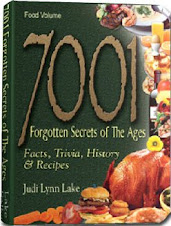
Order 7001 Fogotten Secrets of the Ages Today in Time For The Holidays! 7001 Forgotten Secret's of the Ages is a marvelous potpourri of history, facts, secrets and trivia all about food. Beginning with the history of food, this is one book that will keep all trivia buffs and information seekers busy for years to come!

Loaded with information 'from soup to nuts', secrets known throughout the ages are rediscovered to preserve for generations to come. Here you will discover all cooking and baking secrets; unusual food facts you will use everyday to save yourself time, money and aggravation; current nutrition facts and health tips; how to make children interested in eating healthy Plus important food safety information that restaurants and grocery stores are not telling you.

Also included are recipes for the most casual barbeque to the most formal dinner parties; theme party ideas, and even what was served in the Victorian days! Easy and fun to read format with an index, 7001 Forgotten Secret's of the Ages is a true treasure! It also makes a great gift for anyone on any occasion.


***


Thursday, November 27, 2008

Unusual Food Facts: Part I

There is no set rhyme or reason for this post; its only purpose is meant to inform, amuse, offer alternatives, test your trivia and just have fun with.

Did You Know?
Americas favorite snack food is potato chips. We eat 1.2 billion pounds a year.

Wonder Bread introduced sliced bread in 1930.

The difference between apple juice and apple cider is that the juice is pasteurized and the cider is not.

Van Camp's Pork and Beans were a main food for Union soldiers in the Civil War.

The steam rising from a cup of coffee contains the same amounts of antioxidants as three oranges.

Bananas have no fat, cholesterol or sodium.

The longest carrot recorded was 16 feet 10 ½ inches.

The United States manufactures approximately seven billion pounds of chocolate and candy each year.

As Swiss cheese ferments, a bacterial action produces gas and as the gas is expelled, it bubbles through the cheese leaving holes.

The first hamburgers in U.S. history were served in New Haven in 1895.

Salmon and shrimp are the most popular seafoods in American restaurants.

There are more than 7,000 varieties of apples.

Americans eat 800 million pounds of bologna annually.

The first soda made in the U.S. was Vernor's Ginger Ale, created in Detroit 1866 by James Vernor.

Did you hear about the M&M inspector who got fired for tossing out all the W's?
Well Now You Know!

###

The following video, Vintage TV Commercial: Quaker Oats, courtesy of You Tube.


***

Order, 7001 Forgotten Secrets of the Ages today on Amazon.com

Order in Time For The Holidays! 7001 Forgotten Secret's of the Ages is a marvelous potpourri of history, facts, secrets and trivia all about food. Beginning with the history of food, this is one book that will keep all trivia buffs and information seekers busy for years to come!

Loaded with information 'from soup to nuts', secrets known throughout the ages are rediscovered to preserve for generations to come. Here you will discover all cooking and baking secrets; unusual food facts you will use everyday to save yourself time, money and aggravation; current nutrition facts and health tips; how to make children interested in eating healthy Plus important food safety information that restaurants and grocery stores are not telling you.

Also included are recipes for the most casual barbeque to the most formal dinner parties; theme party ideas, and even what was served in the Victorian days! Easy and fun to read format with an index, 7001 Forgotten Secret's of the Ages is a true treasure! It also makes a great gift for anyone on any occasion.

***


Wednesday, November 26, 2008

How To Avoid Food-Borne Illness: Poultry Safety Tips

Food-borne illness is caused by eating food that contains harmful bacteria, toxins, parasites, viruses, or chemical contaminants.

Bacteria and viruses, especially Campylobacter, Salmonella, and Norwalk-like viruses, are among the most common causes of food-borne illness we know about today. Eating even a small portion of an unsafe food may make you sick. Signs and symptoms may appear within half an hour of eating a contaminated food or may not develop for up to 3 weeks.

Most food-borne illness lasts a few hours or days. Some food-borne illnesses have effects that go on for weeks, months, or even years. If you think you have become ill from eating a food, consult your health care provider.

Follow the steps below to keep your food safe. Be very careful with perishable foods such as eggs, meats, poultry, fish, shellfish, milk products, and fresh fruits and vegetables .


Who Is At High Risk Of Food-Borne Illness?
• Pregnant women

• Young children

• Older persons

• People with weakened immune systems or certain chronic illnesses
New information on food safety is constantly emerging. Recommendations and precautions for people at high risk are updated as scientists learn more about preventing food-borne illness. If you are among those at high risk, you need to be aware of and follow the most current information on food safety.


Safe Basics For Handling Poultry
Safe steps in handling, cooking, and storing poultry are essential to avoiding food-borne illness. Follow these guidelines to keep pathogens away.


Safe Shopping
• Never choose packages that are torn or leaking.

• Do not buy foods past "sell-by" or expiration dates.

• Place raw poultry in plastic bags so meat juices cannot cross-contaminate other foods.

• Place refrigerated or frozen items in your cart just prior to checking out.

• Keep perishable items inside the air-conditioned car - not in the trunk.

• Drive directly home with your groceries. If you live farther than 30 minutes away, place perishables in a cooler with ice.

Safe Storage of Foods
•Unload perishable foods from the car first and immediately refrigerate them. Place securely wrapped packages of poultry in the coldest section of your refrigerator.

• Check the temperature of your refrigerator with an appliance thermometer. It should be at 40°F; the freezer at 0°F.

• Cook or freeze fresh poultry within 2 days; other beef, veal, lamb, or pork within 3 to 5 days.

• Keep meat poultry in its package until just before using.

• If freezing meat poultry in its original package longer than 2 months, over-wrap these packages with airtight heavy-duty foil, plastic wrap, freezer paper or plastic freezer bags.

• Poultry defrosted in the refrigerator may be refrozen before or after cooking. If thawed by other methods, cook before refreezing.

Thaw Food Safely
• A refrigerator allows slow, safe thawing. Make sure thawing juices do not drip on other foods.

• For faster thawing, place food in a leak-proof plastic bag and submerge in cold tap water.

• If using a microwave to defrost, cook poultry immediately after thawing.

_____________________________________________________________

!! WARNING !!

Never stuff the chicken in advance. Stuffing in advance will increase the risk of bacteria growth. Stuffing can be made in advance and refrigerated separately from the chicken and then inserted in the chicken just before cooking.

_____________________________________________________________


Safe Food Preparation

• Wash hands before and after handling raw poultry.

• Sanitize cutting boards often in a solution of 1 teaspoon chlorine bleach in 1 quart of water. Wash kitchen towels and cloths often in hot water in washing machine.

• Don't cross-contaminate. Keep raw meat, poultry, fish, and their juices away from other food. After cutting raw meats, wash hands, cutting board, knife, and counter tops with hot soapy water.

• Marinate poultry in a covered dish in the refrigerator.

For the latest information and precautions, call USDA's Meat and Poultry Hotline, 1-800-535-4555, or FDA's Food Information Line, 1-888-SAFE FOOD, or consult your health care provider. You can also get up-to-date information by checking the government's food safety website at http://www.foodsafety.gov .

###

The following video, New Report From FDA On Food Borne Illness available on You Tube.


***


Order, 7001 Forgotten Secrets of the Ages today on Amazon.com

Order in Time For The Holidays! 7001 Forgotten Secret's of the Ages is a marvelous potpourri of history, facts, secrets and trivia all about food. Beginning with the history of food, this is one book that will keep all trivia buffs and information seekers busy for years to come!

Loaded with information 'from soup to nuts', secrets known throughout the ages are rediscovered to preserve for generations to come. Here you will discover all cooking and baking secrets; unusual food facts you will use everyday to save yourself time, money and aggravation; current nutrition facts and health tips; how to make children interested in eating healthy Plus important food safety information that restaurants and grocery stores are not telling you.

Also included are recipes for the most casual barbeque to the most formal dinner parties; theme party ideas, and even what was served in the Victorian days! Easy and fun to read format with an index, 7001 Forgotten Secret's of the Ages is a true treasure! It also makes a great gift for anyone on any occasion.