Showing posts with label food. Show all posts

Sunday, April 19, 2009

The BBQ: Gas verses Charcoal


In the beginning there was only wood and a rock fire pit but today we are faced with options only the space age could conjure up. Decisions, decisions and more decisions, how do you make a clear concise determination on what type of BBQ to acquire? Everyone’s needs and wants for their outdoor extravaganza is different and as such their tools must match the job at hand.

Lets examine both.


GAS: Definitely a faster and cleaner way to BBQ. Turn the knob, press the button and instant flame. Heat your lava rock for a few minutes throw on your prize cut of meat and within minutes a palatable delight is gracing your table. That is, if you don’t run out of gas. I found this to be my number one problem with the gas BBQ. The cure? Have a spare tank on hand.

It only takes a few precious seconds to change tanks and your back on course. Gas grills are particularly good if you BBQ often on the stern of your boat, as charcoal tends to absorb moisture and becomes very difficult to light. Another consideration for this is no ashes to dispose of.

Gas BBQ’s are fast, no muss no fuss cookers ideal for the spur of the moment chef. Over a period of time they are less expensive to operate too. The down side of the gas grill is the expense. Although they have come down in cost considerably since their inception, the multitude of styles often make it hard to purchase the more affordable ones.

Stainless steel exteriors, double and triple shelves, additional burners for your side dishes, condiment holders, and cabinets for your accessories are impossible options to pass on, so expect to make a considerable investment when purchasing. The more reserved BBQer is more likely to purchase gas over the charcoal unit.

***

CHARCOAL: Tribal desires drive men to the charcoal BBQ. The age old desires to build and tend a fire are urges just to strong to overcome for some men. The perfect arrangement and stacking of the briquettes becomes an ancient ritual to obtain perfection of temperature and evenness of cooking. The charcoal chef is born of redneck ancestors and beer guzzling traditions necessary to tend the wild eruptions of searing fat and dripping sauce.

If your choice is charcoal, prepare yourself for singed beards and blistered fingers for without these added wild antics, charcoal cooking is extremely uneventful until the prize is removed from the smoking embers. The costs for a charcoal unit range from relatively inexpensive to moderately priced depending on weather your setting it on stolen milk crates or you prefer it to be raised from the dirt on its own legs. Critics claim the taste of BBQ is no different whether you use gas or charcoal. I guess because of being from dubious ancestry, I much prefer the charcoal BBQ.

Regardless which barbecue you decide on, make sure the one you purchase has either stainless steel or porcelain cooking racks. More BBQ’s are tossed aside because of rusted and warped cooking racks than for any other reason. I also recommend one that has a vented cover. This serves several purposes. It protects the interior of your barbecue during inclement weather, it helps maintain temperatures under windy conditions, and it also helps in the flavor of your meats as the smoke is held internally while its closed.

Another important accessory to your BBQing experience is the utensils. Purchase only heavy duty stainless ones that wont bend or twist causing the loss of your dinner to the dirt. Although the 3-second rule always applies to BBQ, it’s really hard to brush the dirt out of the sauce.

Gas or charcoal, it matters little as long as the end result is a full belly and a smiling face. Neither unit is better than the other; they just fit different lifestyles and tastes, personalities and urges. Just gather together your family and friends and enjoy your companionship and creations.

###

The following video, I Love Lucy | Building a B.B.Q. (Part 2), courtesy of You Tube.

Sunday, December 21, 2008

Fruits and Vegetables: More Matters


“An apple a day keeps the doctor away!” Generations have grown up with this saying. The nutritional value of fruit is almost endless. Antioxidants, fiber, vitamins, minerals, and natural sugars make fruit an important part of the food pyramid. They even have medicinal value; who has not heard of sailors using fruit on long voyages at sea to prevent scurvy, and of the beneficial uses of prunes as a natural laxative? The natural sugars also make fruit an excellent substitute as treats for kids and adults both.

Research continues to find strong links between increased fruit consumption and the decreased risk of chronic diseases such as cancer, heart disease, and stroke. Convincing evidence proves that fruit consumption plays a positive role in the reduced incidence of cataracts, diverticulosis, high blood pressure, chronic obstructive pulmonary disease, asthma, bronchitis, and osteoporosis.

Three Good Reasons To Eat More Fruits and Vegetables
1. Fruits and vegetables are rich in vital nutrients.
The following categories of fruits and vegetables are important to eat at least several times a week for their nutritional benefits
• Dark green vegetables such as spinach, broccoli and leaf lettuce
• Orange vegetables such as sweet potatoes and carrots
• Starchy vegetables such as potatoes and corn
• Dry beans such as kidney beans, black-eyed peas and black beans.
2. Fruits and vegetables look as good as they are for you.
Try eating a diet rich in colorful fruits and vegetables. The potential benefits associated with eating more fruits and vegetables stack up quickly – reducing your risk of chronic diseases in only the beginning.
3. Fruits and vegetables are nature’s perfect convenience food.
Fruits and vegetables provide the unrivaled combination of great taste, nutrition, abundant variety and multiple product forms.

Serving More Is Easy!
For Snacks:
Fresh fruits and vegetables beat candy by a mile.
• Put whole fruit in a bowl on the counter – it’s easy to see and remember to eat.
• Keep dried fruits, like raisins and trail mixes, on hand.
• Make the TV snack fresh produce for everyone, with dips of low-fat sour cream or dressing for vegetables; low-fat yogurt and honey for fruit dips.
• Use pre-cut melons and fruit cups for quick and easy snacks.
At Meals:
It’s easy to enlarge your portion of vegetables by adding them to the foods you already enjoy.
• Use fresh-cut vegetables to decorate homemade or frozen pizza.
• Add vegetables to soups, stews, pasta sauces, omelets and sandwiches.
• Prepare entrée salads with lots of vegetables topped by a small serving of meat.
With Kids:
Let children help prepare dinner by “decorating” entrees and side dishes with fresh-cut vegetables. In this case, a little nibbling is okay.
• Stash carrot and celery sticks on low shelves so young children can reach them more easily than the sugar snacks
• Have kids design their plates: broccoli for the trees; carrots and celery for flowers; cauliflower for clouds and yellow squash for the sun
• Freeze whole seedless grapes for a cool, sweet treat.

###

The following video, Popeye: Gopher Spinach, courtesy of You Tube.


***

Saturday, December 13, 2008

An Affair Worth Talkin’ About


I can’t remember when I first met her, but I do know it was love at first “bite". There she was, seductively placed in front of me, eager to be devoured.

Experiencing her was the most heavenly experience any young person could expect. With one long, luscious bite, she swept me into a love affair that has lasted more than forty years.


Some of her charm, no doubt, is the enchantment enjoyed by everyone: young and old.


But, to this day, I so get excited simply hearing her name…

…Sara Lee. S-a-r-a—L-e-e.

That’s right, Sara Lee, the world’s best bakery found in every supermarket’s freezer section.


Just imagine…


…devouring Sara Lee’s French Style Croissants for breakfast. Her croissants are made using real butter to give them a light, melt in the mouth texture;
…or nibbling on her delicious cheesecakes that have her famous smooth creamy texture and flavor;

…then, in my opinion, the best: Sara Lee’s Deep Dish fruit pies. Her savory pies are all packed with generous fruit pieces surrounded by flaky, sweet pastry. Everything a pie should be!


Apparently, Sara has also enamored the famous song writing team, John Kander and Fred Ebb… so much so that they wrote a show tune just for her in 1976:
Sara Lee
There is a lady living somewhere,

where it is I do not know,

but I long to write and tell her,

that I love her so.


I believe I might do mayhem,

and I might destroy myself,

if I ever found her missing
from my grocer`s shelf.


Sara Lee,
Sara Lee.
Your Brioche just fractures me.

Give me a taste of your cherry danish,
my mother bakes well,

but you can't compare her,

not with Sara Lee,
Sara Lee.

There`s no `H’,
just Sara Lee,
but that`s okay by me.
`Cause I`m living in paradise,

when I`m nibbling the apple spice,

from the kitchens of that lovely Sara Lee.

And it thrills me right to my soul,

when I'm chewin` her finger roll.

And I'm sayin`,
`For Goodness Sake,
There Can Never Be A Better Banana Cake!
`
Cousin Milton works at the Hilton;
he caters banquets and at each affair,

he'll swear by Sara Lee, Sara Lee.

There`s no `H`,
just Sara Lee,
but that`s okay by me.
I love your cheesecake,

white as pearl,

not to mention,
the Choclate Swirl,
from the kitchens of the one I love: Wonderful Sara Lee!
— John Kander and Fred Ebb, 1976

***
You know what they say, “Everybody doesn’t like something; but nobody doesn’t like Sara Lee." Here's to you, Sara!

©Judi Lake. All Rights Reserved Worldwide.

###

The following video, Liza Minnelli singing "Sara Lee", courtesy of You Tube.


***


Friday, December 5, 2008

Kids and Food Battles


Parents battle daily over two things with their children. Number one is cleaning up their messes, and number two is eating their meals. We cannot compel them to clean their room, but we can entice them to eat their meals. This section is a parent’s dream; this is where we parents can “even the score” with our kids— at least a little!

How wonderful not only get them to eat healthy, but to have them help in making meal time something special by preparing fun, healthy food. (This also makes mom a superstar!) The secret to making food fun is to let kids decorate. Find out what they like to eat and slide in some healthy décor, making sure that it was their idea, of course!

Male or female, all children have an interest in the great kitchen gadgets that they never get to play with. Mom, make your work their play; create an event in your kitchen and let the kids be the stars. For those boring rainy days, your kitchen abounds with fun projects to keep little hands and minds busy.


Now A Lil Treat!
How about some fun stuff for kids today? Let’s make some toys out of common household products. These projects are taken from the book, “7001 Forgotten Secret’s of the Ages”– Have fun and have a great weekend!


Juggling Balls
Stuff You Need To Get:
3 small sandwich bags, non-zip type
Small dried beans or dried peas
6 medium-sized balloons
What To Do With The Stuff:
1. Fill one sandwich bag with dried beans until it is the size of a small ball.
2. Close the bag by overlapping the ends, like you do around a sandwich.
3. Cut off the stem of the balloons at the round part.
4. Stretch one balloon around the ball of beans.
5. Stretch another balloon around the ball in the opposite direction of the first balloon.
6. Repeat each step for the other bags and balloons.
Creative Possibilities:
• Use some markers to decorate your juggling balls. Use permanent ink markers if possible.
• If you do not have dried beans or peas, try using rice, sand or even salt. (But not rock salt.)
• Borrow a book from the library to learn how to juggle.

***

Sparkling Rocks
Stuff You Need To Get:
½ cup white glue
Food coloring
2 cups rock salt
A large piece of cardboard
What To Do With The Stuff:
1. Mix together the rock salt and about 7 drops of food coloring in a small mixing bowl.
2. Remember, food coloring is very concentrated.

3. Stir in the glue for another 2 or 3 minutes.
4. Use your hands to mold and sculpt the mixture to the shapes and sizes you want.
5. Then place them on the cardboard to dry. How long they have to dry will depend on the size and thickness of your sparkling rocks.
Creative Possibilities:
Use cookie cutters to make different shapes for the season or holiday. For Halloween make glimmering ghosts, sparkling bats and shiny witches.
For Christmas, you can make tree ornaments. Shape the mixture into whatever you want. Get some strong thread or string, cut about 3 or 4 inches long. Tie the 2 ends of the string together to make a loop. Place the knot into your design, making sure to leave a loop for hanging. When you are ready to hang it, make sure the string is secure enough.

Make some pretty jewelry for your mom for her birthday or Mother’s Day, or just to tell her that you love her. Add some glitter to make it more gleaming.

###

The following video, CHEERIOS V-8 1960 SPACE-THEMED COMMERCIAL, courtesy of You Tube.


***


Tuesday, December 2, 2008

A Quick History of Food


MANY OF THE MODERN AND DIVERSE foods we are familiar with and enjoy today were actually developed during a brief period of time from 1850 to 1900, much of which was promoted for its healthful properties and beneficial effects then, as it is today. Thus were the beginnings of what is referred to today as “nutritional science.”

Scientists (in concert to some extent with medical practitioners) began to realize the relationship between our health and the foods we eat. Further, exciting advances in analytical chemistry provided hard scientific data to prove it.

Recognizing the power behind the old adage, “you are what you eat,” food advertisers were quick to herald such news to a public that was open to learn about this “new” nutritional science. By 1901, food ads were calling attention to the “wholesomeness" and "healthfulness" of their food products. “Eat less meat and more Quaker Oats," and “Cereal leads to good health,” the American Cereal Company's ads proclaimed.

On the other hand, Dold's Packing Company, was adamant that their "corn-fed porkers made sweet healthful food." Vendors distributed literature and trading cards at markets and any venue where food was sold. They hired "barkers" at local fairs and events to sell their “healthy foods” in every way possible. The public was being effectively educated on the idea that healthy food products would make them feel better and live longer.

The result over time was that the general public became better educated in nutrition and, better yet, more discerning today of what constitutes genuinely healthful food.


CANNED AND PACKAGED FOODS
Ironically, as the emphasis on eating healthier food grew, so did the public's desire for quick and easy to serve processed food products. The late 19th Century saw the development of the canned meat and fruit industries— Libby's, Armour's, Van Camp, Borden and Heinz were the giants of the day. During this period saccharin, synthetic vanilla, and flaked cereal also entered the market, as well as the numerous soda pop brands, most of which are still sold today. The decade of the 1890s was an especially lucrative one for "quick food" producers with products like minute tapioca, "instant" cereal, condensed soup, and pre-ground coffee guaranteed to ease the labor of meal preparation.

The first metal cans/containers were patented by Englishman Thomas Kensett in 1825. While canned meats, fruits and vegetables were produced in America on a limited basis prior to the 1850s, the Civil War "created a significant need for portable foods to feed the troops and as a result, the canning industry rapidly expanded."

Opening canned foods was somewhat problematic until the invention of the can opener in the 1860s. Development of an opener was possible once cans were made of steel rather than iron.

The initial response to canned foods was one of skepticism and the age-old practice of "putting-up" preserves, fruits and vegetables at home continued in many middle-class kitchens. By the time the new century had arrived, hundreds of food products were being commercially prepared, and sales began to indicate that the American homemaker was accepting these new, convenient products. Not only did packaged goods bring economy to the kitchen in terms of time and convenience but the increased availability of fruits and vegetables all year round meant the family no longer had to dine according to what was in season.


THE BIRTH OF SOME POPULAR FOODS
1872: Blackjack Chewing Gum
1874: Ice Cream Soda
1876: Premium Soda Crackers (later Saltines)
1876: Hires Root Beer
1881: Pillsbury Flour
1886: Coca-Cola
1887: Ball-Mason Jars
1888: Log Cabin Syrup
1889: Aunt Jemima Pancake Mix
1889: Calumet Baking Powder
1889: McCormick Spices
1889: Pabst Brewing Company
1890: Knox Gelatin
1890: Libby Introduces Keys to Canned Meat
1890: Lipton Tea
1891: Del Monte
1891: Fig Newton
1891: Quaker Oats Company
1893: Cream of Wheat
1893: Good & Plenty
1893: Juicy Fruit Gum
1894: Chili Powder
1895: Shredded Coconut
1895: Triscuits
1896: Cracker Jack
1896: Michelob Beer
1896: S&W Canned Foods
1896: Tootsie Roll
1897: Campbell's Condensed Soup
1897: Campbell's Tomato Soup
1897: Grape Nuts
1897: Jell-O
1898: Nabisco Graham Crackers
1898: Shredded Wheat Cereal
1900: Coney Island Hot Dog
1899: Wesson Oil
1900: Chiclets Gum
1900: Cotton Candy
1900: Hershey's Chocolate

###

The following video, Coca-Cola Natal Christmas 1944-1973 - 2007, courtesy of You Tube.


***

Sunday, November 23, 2008

How To Shop For A Turkey


When purchasing a whole turkey, turkey parts, or any type of turkey product, it is important to read the label to ensure that you are selecting a product that fits your requirements. Whole turkeys sold in food stores are inspected by the USDA, so you can be sure that the turkeys are safe and of good quality. Look for the USDA stamp on the label.

The youngest turkeys have the most tender meat. Most commercially produced turkeys are young turkeys, so the meat is usually always tender if the turkey is rated Grade A and if it is cooked properly. The youngest turkeys that are available, usually less than 4 months old and under 8 pounds in weight, are labeled fryer/roasters and have the most tender meat of all.

The designation of the turkey being male (tom) or female (hen) may or may not be found on the label because it has nothing to do with the tenderness or overall quality of the bird. The main difference is that a tom turkey ready for market is larger than a hen.

Turkey processors and food stores use several different dating methods to ensure that the consumer receives a product that is fresh and safe to eat. The dating methods are described below.

Turkey Dating Methods

Sell By
A whole turkey or turkey product that has the words, "sell by", followed by a date stamped on the package, indicates that the food store may display the product for sale until that date and the consumer should purchase the turkey or turkey product before the date expires. The turkey is still safe to use for another one or two days beyond the sell by date.


Best if Used By or Best if Used Before
A product with the words, "best if used by" or "best if used before", followed by a date, indicates that the optimum flavor and quality can be enjoyed if the turkey is prepared before the date expires. The date does not indicate that product is unsafe to eat after the expiration date.


Use By
A whole turkey or turkey product with a "use by" date stamped on the package indicates the final date that the product should be used.

Note: If you decide to freeze a fresh turkey after purchasing it, the expiration dates are meaningless because the product is no longer perishable while it is frozen. The date stamped on the package can serve as an indication of the time period that the turkey was purchased so that it can be used within the recommended limits for freezing.

The label on fresh and frozen turkey will also show the nutritional information. The nutritional information will include the recommended serving size, calories, fat and cholesterol content, and a list of the nutrients including vitamins and minerals. As required by the USDA, the label will contain helpful information pertaining to food safety and proper handling. Cooking instructions are also included.

***

This recipe is perfect for those people who just are not sure how to tell when poultry is cooked thoroughly but not dried out. Give this a try.

BAKED STUFFED Turkey 6-7 lb. 1 cup melted butter 1 cup stuffing 1 cup uncooked popcorn salt/pepper to taste Preheat oven to 350O. Brush turkey well with melted butter, salt and pepper. Fill cavity with stuffing and popcorn. Place in baking pan in the oven. Listen for popping sounds. When the turkey's backside blows out the oven door and flies across the room, the turkey is done.

__________________________________________________________________

Inspection And Grading
The USDA (United States Department of Agriculture) inspects turkeys for quality. The USDA seal can be found on the package, ensuring that the turkey has passed inspection and is suitable for human consumption. Most turkeys sold in food stores are des ignated "Grade A", meaning that they are of the highest quality. Grade A turkeys have no surface damage such as broken skin, tears, bruises, or cuts and all pinfeathers have been removed. There are no broken bones and the bird is plump and has a pleasing shape. Turkeys that do not receive a Grade A seal are still safe to eat, but their appearance and overall quality may be less than ideal. The other grades given to turkey, as well as other kinds of poultry are Grade B and Grade C.

Poultry is graded according to the following criteria:

• Conformation (proportion of meat to bone)

• Fat coverage

• Fleshing

• Absence of pinfeathers

• Absence of damage, including cuts, bruises, and broken bones

Look And Feel
Inspecting and feeling fresh turkey can provide information not found on the label. Look for indications that the whole turkey or turkey pieces have been stored at improper temperatures. Fresh turkey pieces can be squeezed or pressure can be applied to the package to feel for signs of freezing. Look for ice crystals forming on the bottom tray of the packaging or along the wings and edges of the pieces, which indicates that the turkey has been stored in temperatures that are too cold. Partial freezing is not harmful in terms of wholesomeness, but it will not extend the "sell by" date.

It is also important to be aware of whole turkeys or turkey pieces that are stacked too high in open refrigerator cases in a food store. The turkeys at the top of the pile will not be chilled to the proper temperature because they are above the proper storage level of the refrigerator case. This can result in the growth of bacteria especially if the temperature rises above 40°F, which will greatly decrease the time period that the turkey is safe to eat.

A similar problem occurs with frozen turkey that is stacked too high in an open freezer case in a food store. The turkeys on the top may be above the freezing line of the freezer case, which results in the turkeys being stored in temperatures that are inadequate for proper freezing. A frozen turkey should be rock hard and show no sign of freezer damage.


Quantity To Buy
If you are unsure of the quantity of turkey to purchase according to the number of guests you will be serving, it is always a good idea to allow for 1 pound of uncooked turkey per person when purchasing a whole turkey. This is a fairly accurate quantity per person, allowing for smaller appetites as well as extra helpings for larger appetites.

It is also important to keep in mind that a larger bird is a better value. Larger turkeys have more meat in relation to the amount of bone and cartilage. With that in mind, allow for up to 1 pound per serving when purchasing a turkey of less than 12 pounds and allow up to 3/4 pound per serving when purchasing a turkey weighing over 12 pounds.

© 2007 Judi Lynn Lake. All Rights Reserved Worldwide.

###

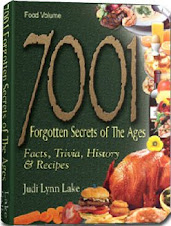
Order, 7001 Forgotten Secrets of the Ages Today on Amazon.com

Order in Time For The Holidays! 7001 Forgotten Secret's of the Ages is a marvelous potpourri of history, facts, secrets and trivia all about food. Beginning with the history of food, this is one book that will keep all trivia buffs and information seekers busy for years to come!

Loaded with information 'from soup to nuts', secrets known throughout the ages are rediscovered to preserve for generations to come. Here you will discover all cooking and baking secrets; unusual food facts you will use everyday to save yourself time, money and aggravation; current nutrition facts and health tips; how to make children interested in eating healthy Plus important food safety information that restaurants and grocery stores are not telling you.

Also included are recipes for the most casual barbeque to the most formal dinner parties; theme party ideas, and even what was served in the Victorian days! Easy and fun to read format with an index, 7001 Forgotten Secret's of the Ages is a true treasure! It also makes a great gift for anyone on any occasion.